Couple and Their Two Young Children among 9 Killed in Jet Crash Co-Pilots Text to Boyfriend 10 Minutes Earlier Revealed
On November 1, Adam Robinson and Helen Sharp were aboard their Learjet 60 with their children, Emma and Charlie, when the aircraft crashed in Palm Beach County.
They were also accompanied by close friends, their children’s nanny, and two pilots. Following the incident, family members confirmed the identities of the individuals on board and provided insights into their lives.
Details have surfaced about the purpose of their trip, a recent social media post by Helen, and a succinct message sent by co-pilot Nathalia Gadelha Filgueiras to her boyfriend, indicating the weather conditions.
Birthday Celebration Ends Tragically
The Robinson family, along with friends, was en route from Austin, Texas, to the Bahamas for a week-long celebration of Adam’s birthday when the jet crashed near Greenacres, Florida.
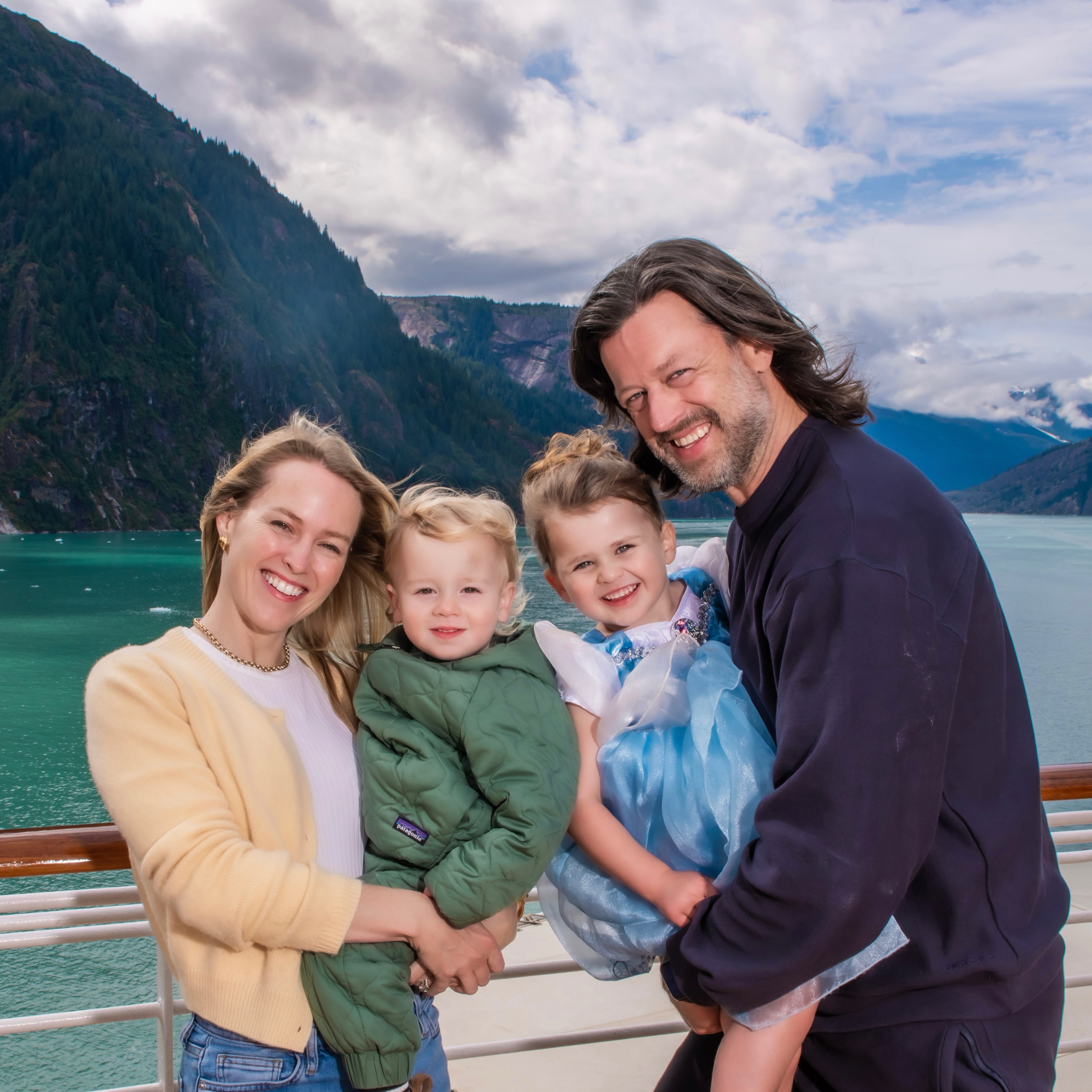
Adam, an entrepreneur in technology, and Helen, a public relations professional who had just opened a ceramics studio, lived in a neighborhood west of downtown Austin.
They were not alone on their trip; family friends Rachael Reed and Charmi Fehr, owners of the luxury Arca Roatán Boutique Hotel in Honduras, were also passengers.
Alongside them was Anita Maria Cetina, who cared for Emma and Charlie, and the flight crew consisted of Captain Jeff Gregory, 55, and 20-year-old co-pilot Nathalia Gadelha Filgueiras.
A family member confirmed Gregory’s role as captain to news outlets. Tragically, all nine individuals on board perished in the crash, marking a devastating loss across three generations for the Robinson and Sharp families.
Dudley Sharp, Helen’s father, expressed the family’s grief, stating, ‘It’s quite a blow. We had a daughter, her husband, and two grandchildren on the plane.’
Adam’s father, Theodore Robinson, 77, also acknowledged his son’s presence on the flight, noting that official notification from authorities hadn’t reached the family yet.
As further information about those on board was revealed, the families released a joint statement regarding the seven who traveled together.
Remembering Lives Lost
The Robinson, Sharp, Reed, Fehr, and Cetina families issued a joint statement confirming that Adam, Helen, Emma, Charlie, Rachael, Charmi, and Anita were all on the flight. They described Adam and Helen as committed parents, noting that their children brought immense joy to their lives.
Relatives fondly recalled the couple’s warmth and generosity, highlighting their profound love: ‘Helen and Adam were the love affair that will last forever.’
Rachael and Charmi were honored for their adventurous spirit and deep care for others, while Anita was remembered as more than just a caretaker; she was considered part of the family.
The families expressed gratitude to first responders, investigators, the local community, and everyone who reached out with support during this tragic time.
Their statement extended sympathy to the families of the pilots who were also mourning this loss.
They requested privacy and indicated that details regarding memorial services would be shared once finalized. Helen’s family noted the deep irony that her death came shortly after she showcased her latest creative endeavor.

Reflecting on Helen’s Final Project
As both a public relations professional and a potter, Helen documented her ceramic work online, including a recent project she had to rework after it didn’t go as intended.
On October 30, just two days prior to the crash, Helen posted her final update on Instagram. She shared that a project intended to be a cactus lamp had tragically broken after a month of effort.
Instead of discarding the shattered ceramic base, she chose to repurpose it, drawing inspiration from the Japanese art of kintsugi, and created a coffee table.
She located a deep green glass spinning top online to match the green glaze of the ceramic base. In the accompanying video, she demonstrated the transformation from the broken lamp to what she named the Succulent Coffee Table.
Expressing her excitement, Helen stated she couldn’t wait to create more and offered the finished table for sale, inviting interested parties to reach out to her. This post remains visible on her profile, and just before the crash, Adam also shared an update on LinkedIn.
In the comments of his last post, numerous tributes and condolences began to appear as loved ones remembered the individuals on board.
Nathalia’s Inspiring Journey
Nathalia, at only 20 years old, had already dedicated years to her dream of flying. Growing up in Palm Beach County as the middle child of three sisters, she developed her passion for aviation early on through flights with her father in his Beechcraft Bonanza.
Her mother, Camila, recalled her daughter’s determination when she declared her intention to become a pilot after one of those flights.
Nathalia’s childhood dream evolved into a serious pursuit. She began ground school in 2020, learning from her father, who had taken up flying recreationally two years prior. By September 2023, she had earned her private pilot’s license while still a high school senior.
Notably, Nathalia achieved the milestone of being able to fly before obtaining her driver’s license, a feat that garnered local media attention. The Palm Beach County School District funded her flight training through its Aviation Academy.
At the time, Nathalia had logged 88 hours of flight time and passed her knowledge test. She expressed aspirations to become a commercial pilot or fly private jets and was scheduled to obtain her driver’s license that November.
After receiving her aviation credentials, Nathalia began working as a flight instructor in Fort Lauderdale and subsequently obtained another pilot position. By November 2026, her stepfather, Thiago Corteleti, reported that she had amassed about 1,300 flying hours.
Having worked as a commercial pilot for nine months, she was nearing her 21st birthday in January. Her mother shared how impressed everyone was by Nathalia’s skills and commitment to aviation.
Camila remarked, ‘Everybody was so impressed with her. They hired her because they knew how good she was and how much she loved it.’
Nathalia’s training led her to the cockpit of the Learjet during the flight from Austin, and shortly before the tragic end, she reached out to someone special.
Final Communication Before Tragedy
According to Nathalia’s stepfather, she sent a brief text to her boyfriend, Justin, about 10 minutes before the plane went down, focusing on the turbulence she was facing in the air.
‘I’ve got turbulence, I’ve got ice,’ she reported. No further details were provided about their exchange. The conditions she described were corroborated by the flight crew as they flew over South Florida.
Later, Camila reflected on her daughter’s lifelong dream of flying. ‘I wanted her to live her dream, but I knew that her dream was going to be the thing that would take her away from me,’ she said.
Proud of Nathalia’s pursuit of her passion, even in light of her own worries about aviation, Camila mourned the loss of her daughter, who died alongside the other seven passengers when the Learjet crashed on November 1.
The families of Adam, Helen, Emma, Charlie, Rachael, Charmi, and Anita indicated they would announce memorial plans in due course.
At the same time, federal investigators are diligently working to determine the events leading up to the crash, including the weather conditions encountered by the crew.
Crash Occurs Near Busy Florida Road
As previously reported, the Learjet went down at around 12:50 p.m. EST in a location near Cresthaven, roughly nine miles from Mar-a-Lago, Donald Trump’s resort.
Earlier that day, Trump had departed from a nearby airport on Air Force One, just over an hour before the aircraft crash occurred.
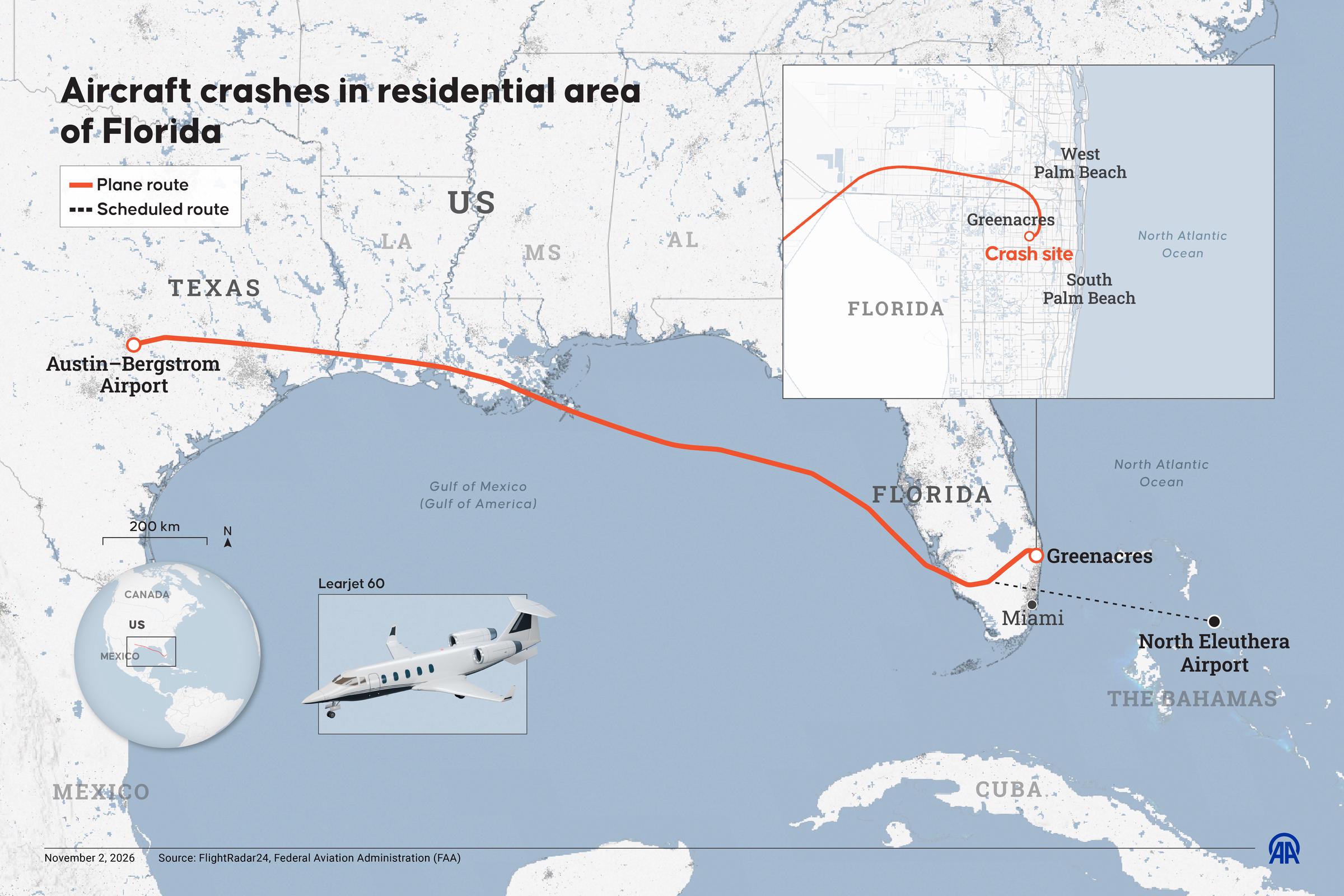
U.S. Transportation Secretary Sean Duffy confirmed that all nine aboard had died. Fortunately, there were no injuries reported among those on the ground. The Federal Aviation Administration (FAA) noted that the Learjet had taken off from Austin-Bergstrom International Airport, en route to North Eleuthera Airport in the Bahamas.
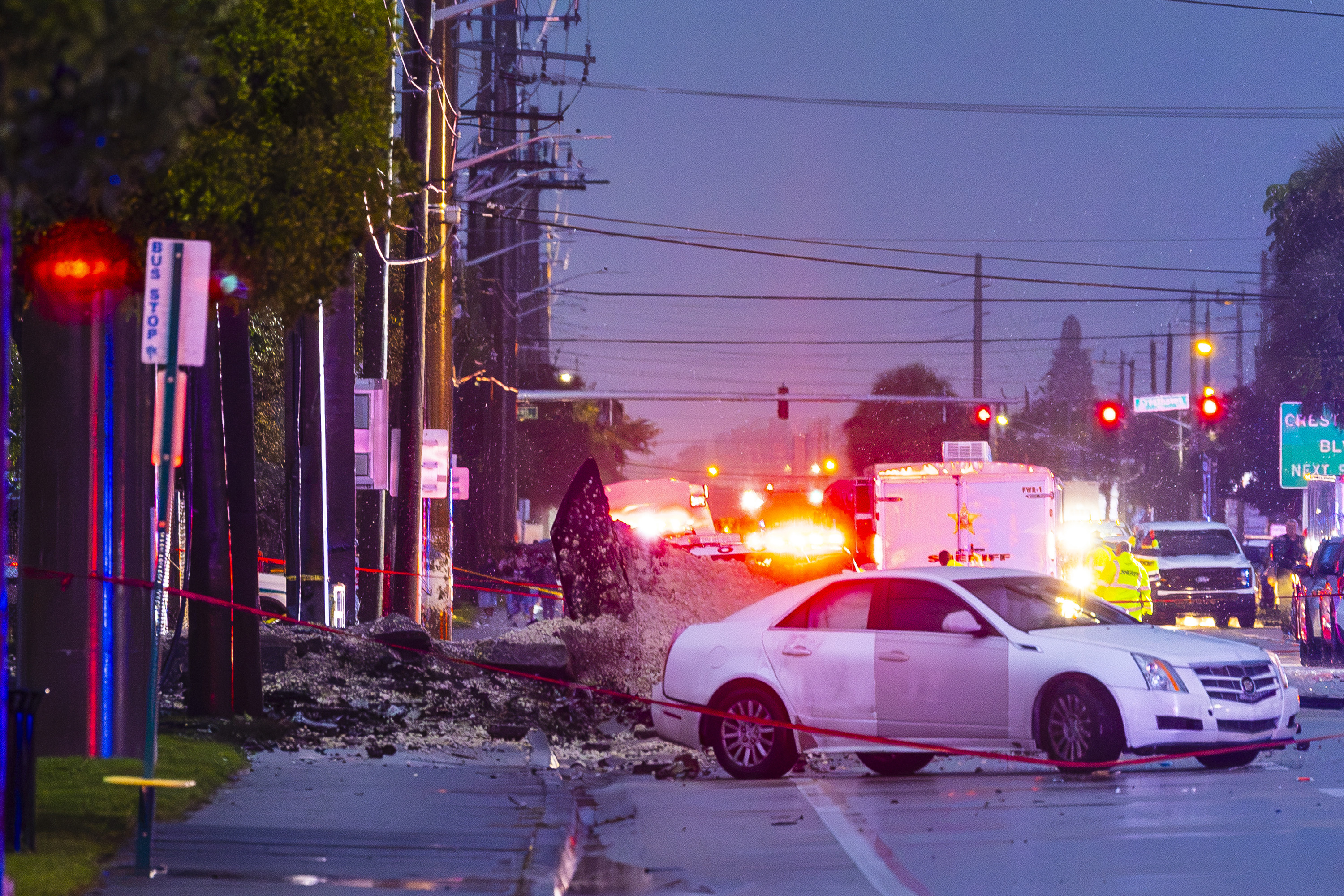
The crash occurred on Military Trail, a major six-lane road surrounded by residential areas and businesses. Photographs from the scene depicted a large hole in the road, with debris and flames scattered around.
Nevertheless, the most alarming details were revealed through recordings of the last communications between the aircraft and air traffic control.
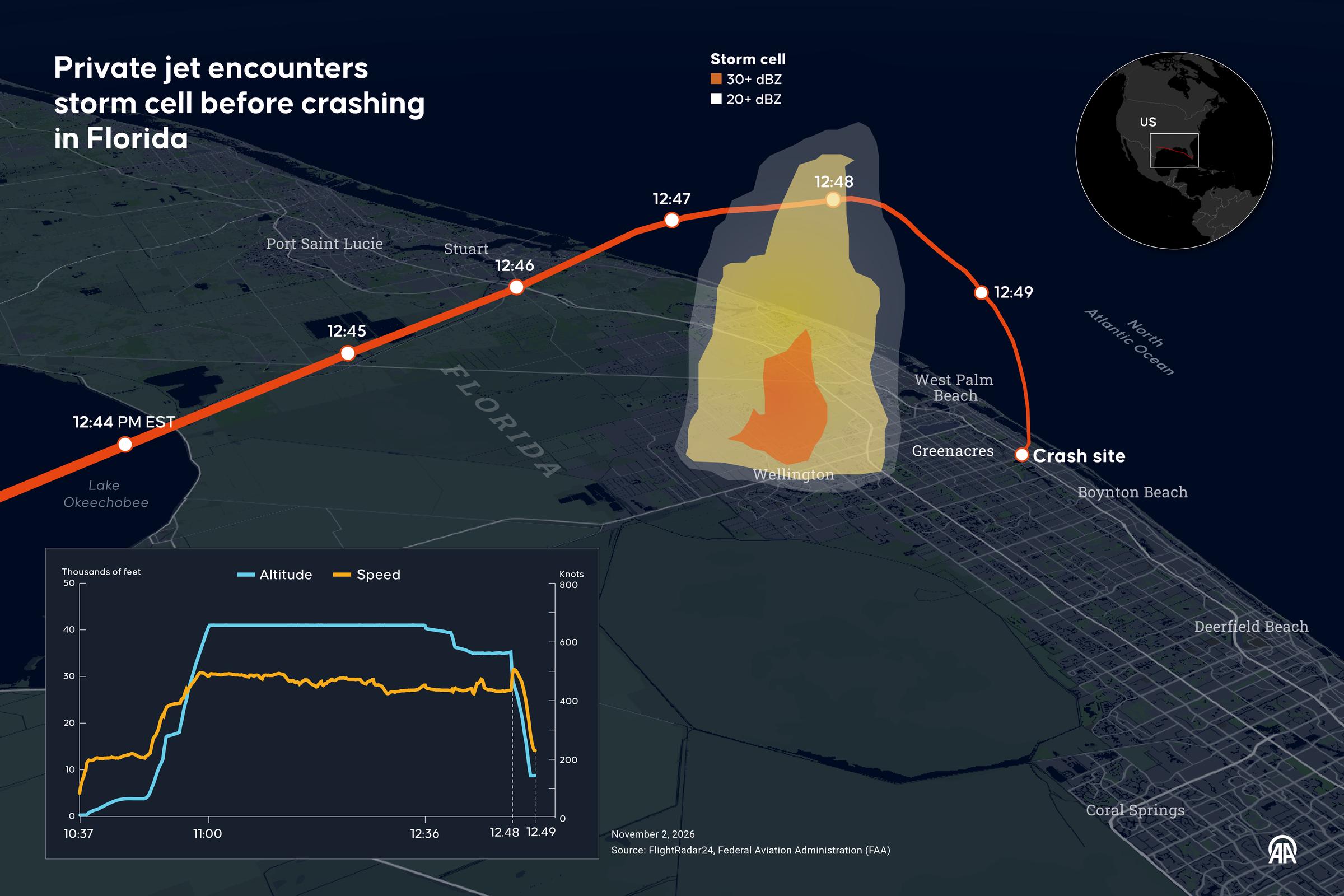
In the moments leading up to the crash, the crew was struggling with severe weather, facing turbulence, icing, and precipitation. Cockpit communication recordings, archived by LiveATC.Net, indicated that the pilots were discussing the conditions surrounding their flight.
At one point, air traffic control inquired about the outside temperature, to which the pilot replied, ‘Minus 47 degrees Celsius. We’re managing the ice, but it is moderate turbulence.’ Initially, this exchange seemed routine, but the situation quickly escalated as the aircraft encountered worsening weather.
The pilot then communicated, ‘Now we’re picking up precipitation. We need to climb,’ to which the controller acknowledged, ‘Roger. Climb and maintain.’
What followed was a dramatic shift in the aircraft’s trajectory.
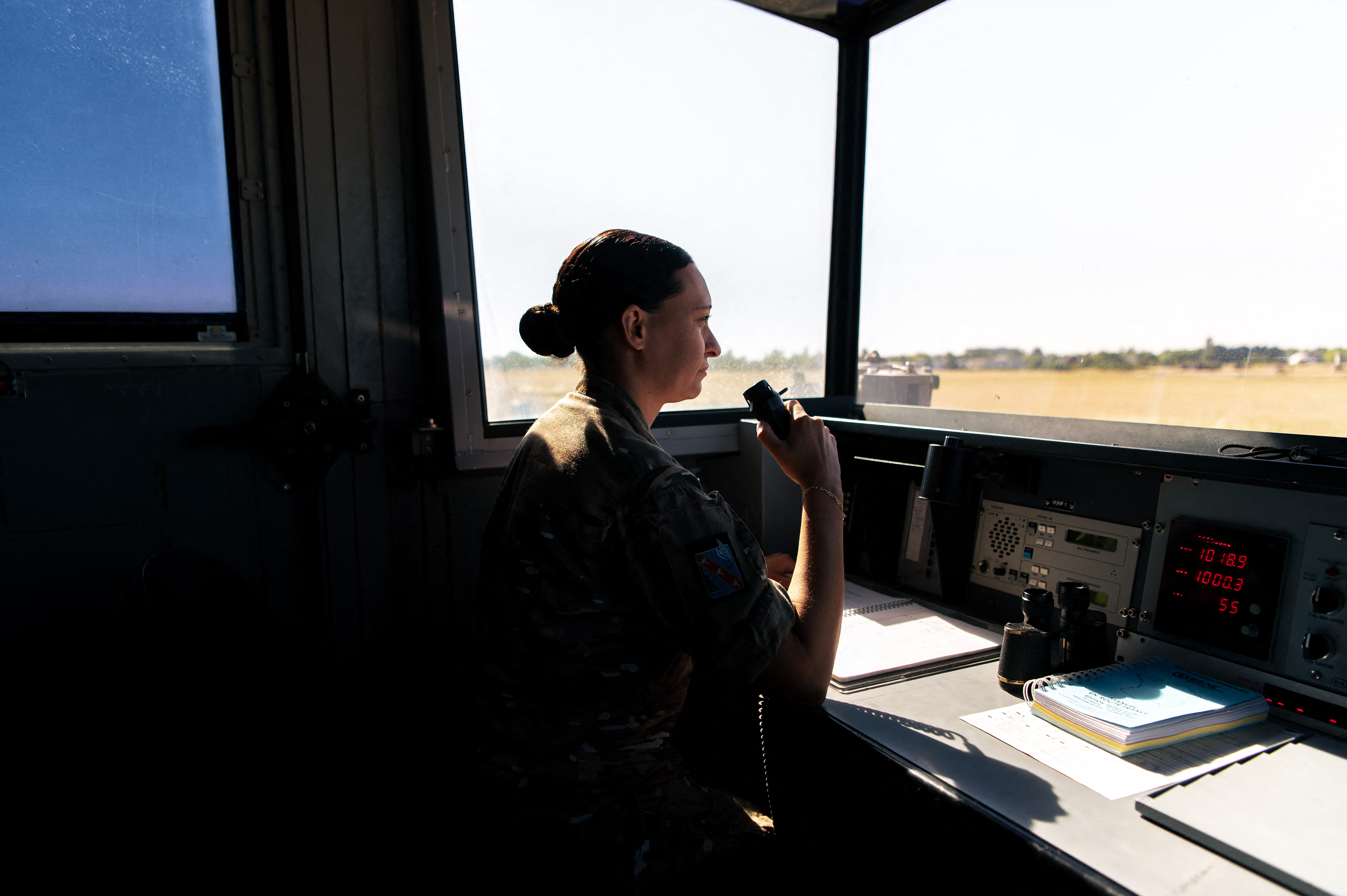
An Urgent Mayday Call: The Learjet Plummets
According to the recordings, the pilot soon reported a troubling drop in altitude. ‘We’re descending 8,000. Mayday, mayday. We’re descending 10,000 feet per minute. Declaring emergency 722 Bravo Delta. We are in an oversea condition, descending 20,000 feet per minute.’
Despite the declaration of an emergency, the descent became increasingly difficult for the crew to manage. Air traffic control tried to maintain contact, asking what assistance was required. The chilling response from the cockpit was, ‘We’re gonna crash into the ground.’
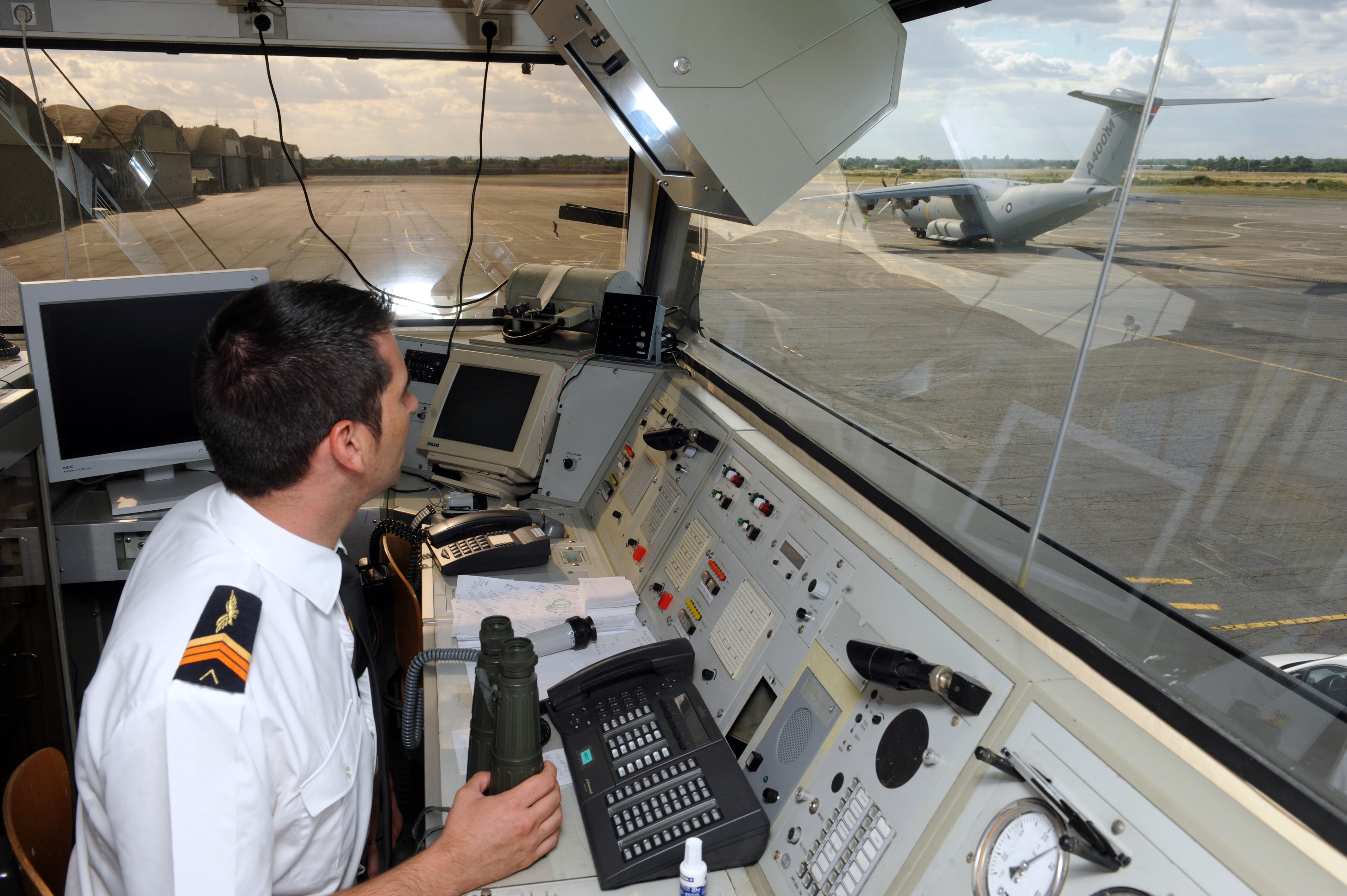
The controller continued to attempt communication, encouraging, ‘November two Bravo Delta. I’m here with you. Talk to me.’ The pilot then reported, ‘We are descending 22,000 feet and banking 60 degrees.’
An additional recording captured what Fox 35 described as an inaudible scream, followed by the words, ‘Look outside.’ Air traffic control’s further attempts to reach the crew yielded no response.
According to reports, the last recorded communication from the cockpit came roughly 35 seconds after the initial mayday call, stating, ‘We’re out of time.’
By this point, the aircraft was in a rapid descent that the crew appeared unable to control.

Dashcam footage recorded the horrifying final moments of the flight, which circulated on social media. The video shows the plane crashing at a steep angle before disappearing into a massive explosion.
A significant fireball erupted upon impact, followed by a thick plume of smoke rising above the surrounding houses and trees. The scene was particularly alarming since the aircraft fell into an area where daily activities were taking place.
Additional neighborhood footage displayed the smoke spreading across the sky as vehicles came to a halt. Onlookers gathered to witness the aftermath of the crash.

While the footage has not been independently validated, it provides a disturbing insight into the disaster. Florida Governor Ron DeSantis described the impact as shocking during a press conference following the incident.
‘When you see that video, it’s a jarring thing,’ DeSantis remarked. ‘It’s like a missile coming down, and a massive explosion, debris going everywhere.’ He characterized the event as a catastrophic crash that left a substantial crater on the road.
Despite the loss of all nine aboard, the incident significantly disrupted the local community. Palm Beach County Fire Rescue declared a mass casualty event as emergency personnel rushed to the site. The crash damaged local infrastructure, including water lines, and debris littered Military Trail.
This damage also affected access to a nearby mobile home park, leading approximately 600 residents to seek temporary housing. Joel Flores, a Palm Beach County commissioner, was the first official on-site and reported that residents were being directed to two designated shelters while investigations continued.

Witness accounts highlighted the explosive impact. ‘I heard and felt the boom,’ Andrew Mannino recounted to CNN, noting that power went out immediately and has yet to be restored. He described smelling smoke and seeing a large black cloud rise into the sky.
Authorities indicated that repairing the road and surrounding infrastructure would require significant time, with estimates suggesting that Military Trail could remain shut down for at least 30 days.
Investigators are working to determine the factors leading to the Learjet’s steep descent.
Weather conditions may provide critical insights, as thunderstorms were noted in the area at the time of the crash. Reports suggest that the aircraft had flown through a more severe storm cell shortly before its rapid descent began.
However, it remains unclear whether the storm was a contributing factor or if other issues caused the aircraft to lose control.
Aviation experts have taken particular interest in the dramatic descent of the aircraft. Mary Schiavo, an aviation analyst, indicated that the dashcam footage could offer valuable information for reconstructing the flight’s final moments.
‘That is not a controlled descent,’ Schiavo noted. ‘It’s clear that, whatever happened, they had lost control of the plane.’
The severity of the steep descent may have caused parts of the aircraft to detach, and the subsequent explosion might have destroyed the flight data recorder, complicating the investigation.
Investigators will also scrutinize the pilots’ mentions of icing prior to the emergency. Ice accumulation on wings and other surfaces can severely disrupt airflow and compromise stable flight.
This hazard is significant enough that the National Transportation Safety Board (NTSB) issued a safety alert in early 2024 regarding risks associated with in-flight icing, warning that ice can hinder an aircraft’s airspeed and flight path management.
Nevertheless, the pilots’ references to managing icing do not directly link it to the incident. Determining its impact on aircraft performance, alongside other factors like storm conditions, is crucial.
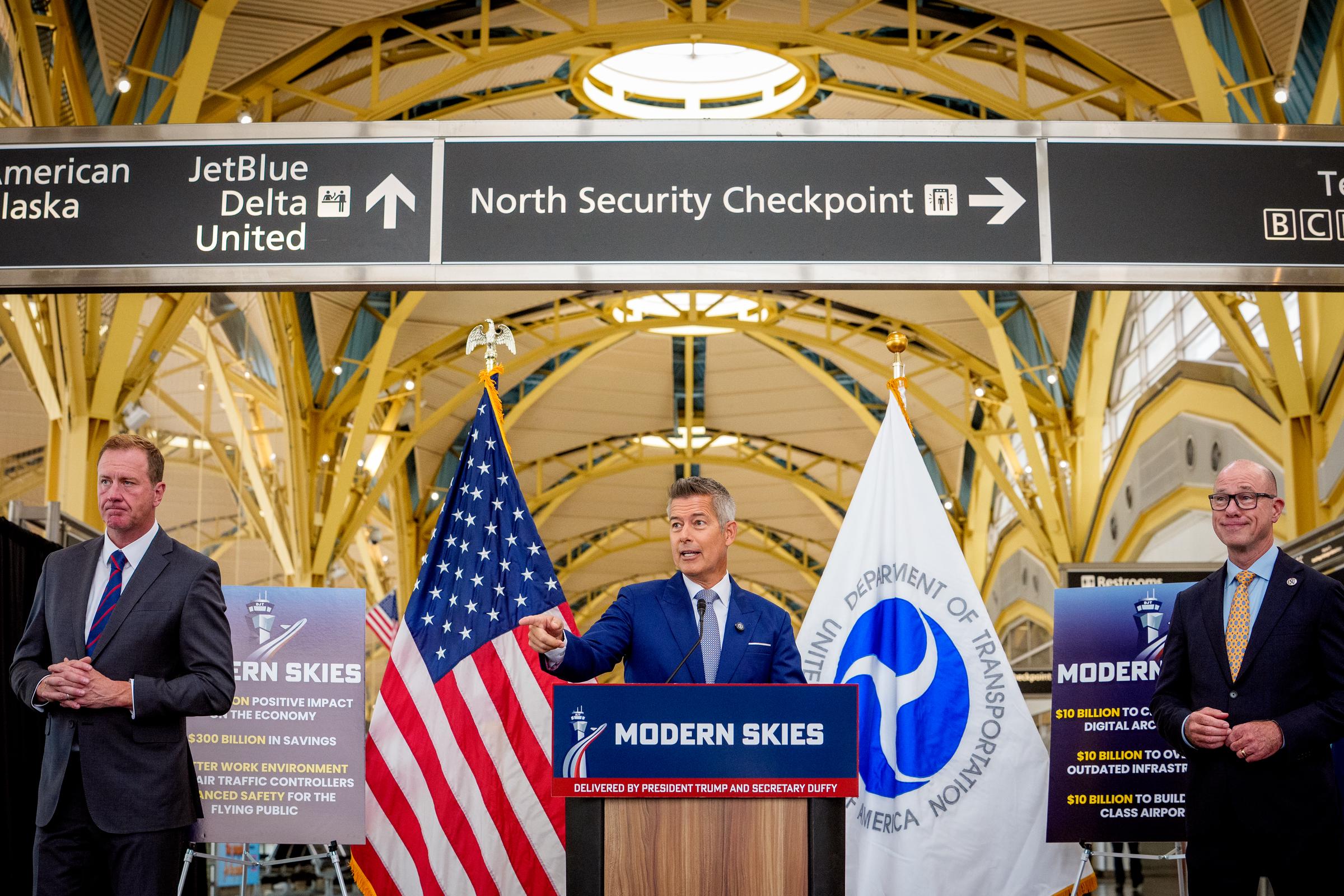
Secretary Duffy referred to the crash as a ‘horrific tragedy’ and announced that the FAA is deploying a team to assist the NTSB in the investigation. ‘Please join me in praying for the families and loved ones of those we lost,’ he added.
The nine fatalities aboard the aircraft have yet to be officially identified, nor has it been confirmed how many were crew members versus passengers. Investigators will analyze the wreckage, flight data, cockpit recordings, weather conditions, and maintenance records to piece together the events that transpired.
This incident is not the first tragic event involving a Learjet 60, although previous accidents occurred under very different circumstances.
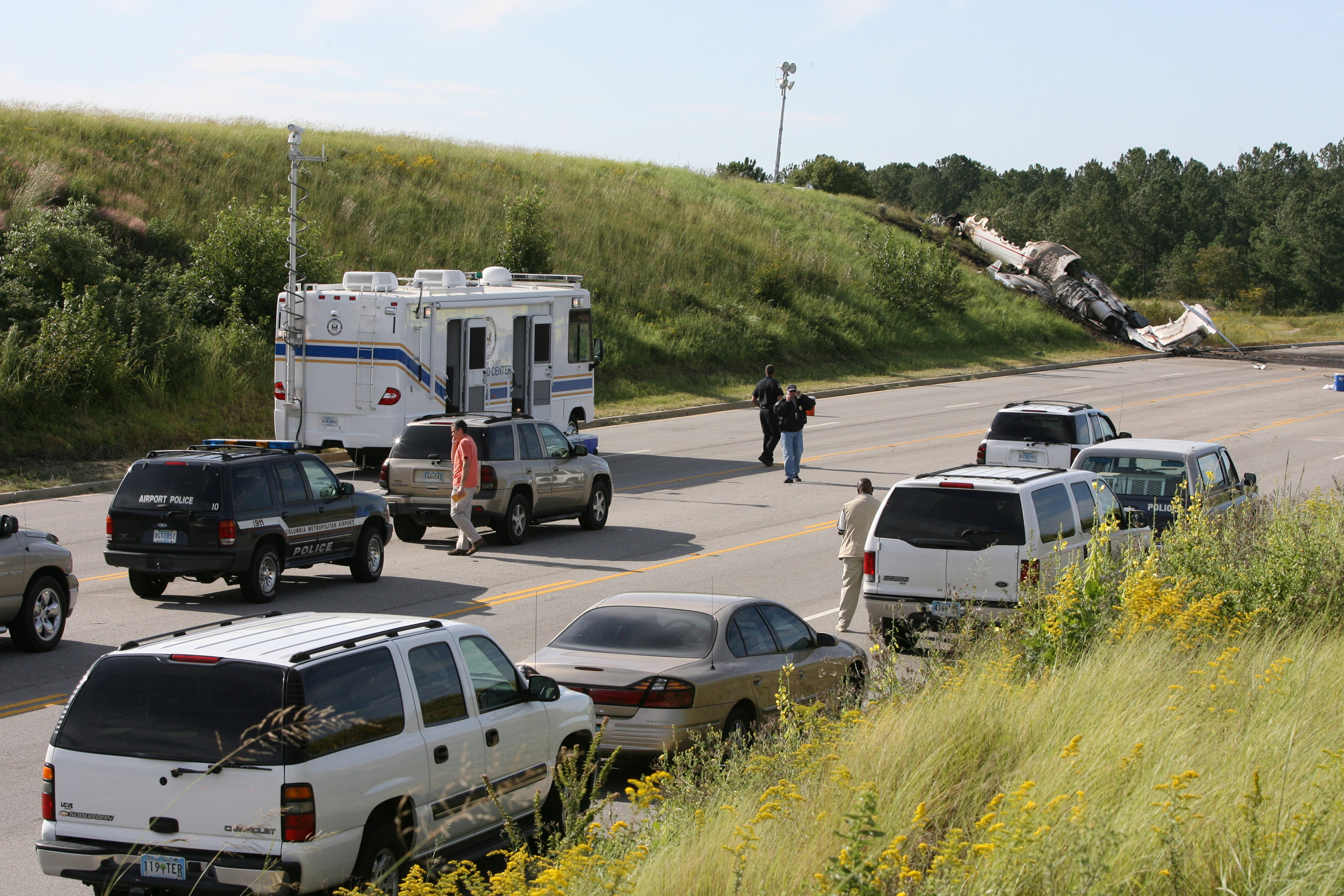
On September 19, 2008, another Learjet 60 crashed while trying to take off from Columbia Metropolitan Airport in South Carolina.
The NTSB determined that the accident was caused by severely underinflated tires and the crew’s choice to abort the takeoff after reaching V1.
All four tires failed during takeoff, which damaged a component of the thrust-reverser system, causing the engines to provide forward thrust instead of stopping the aircraft.
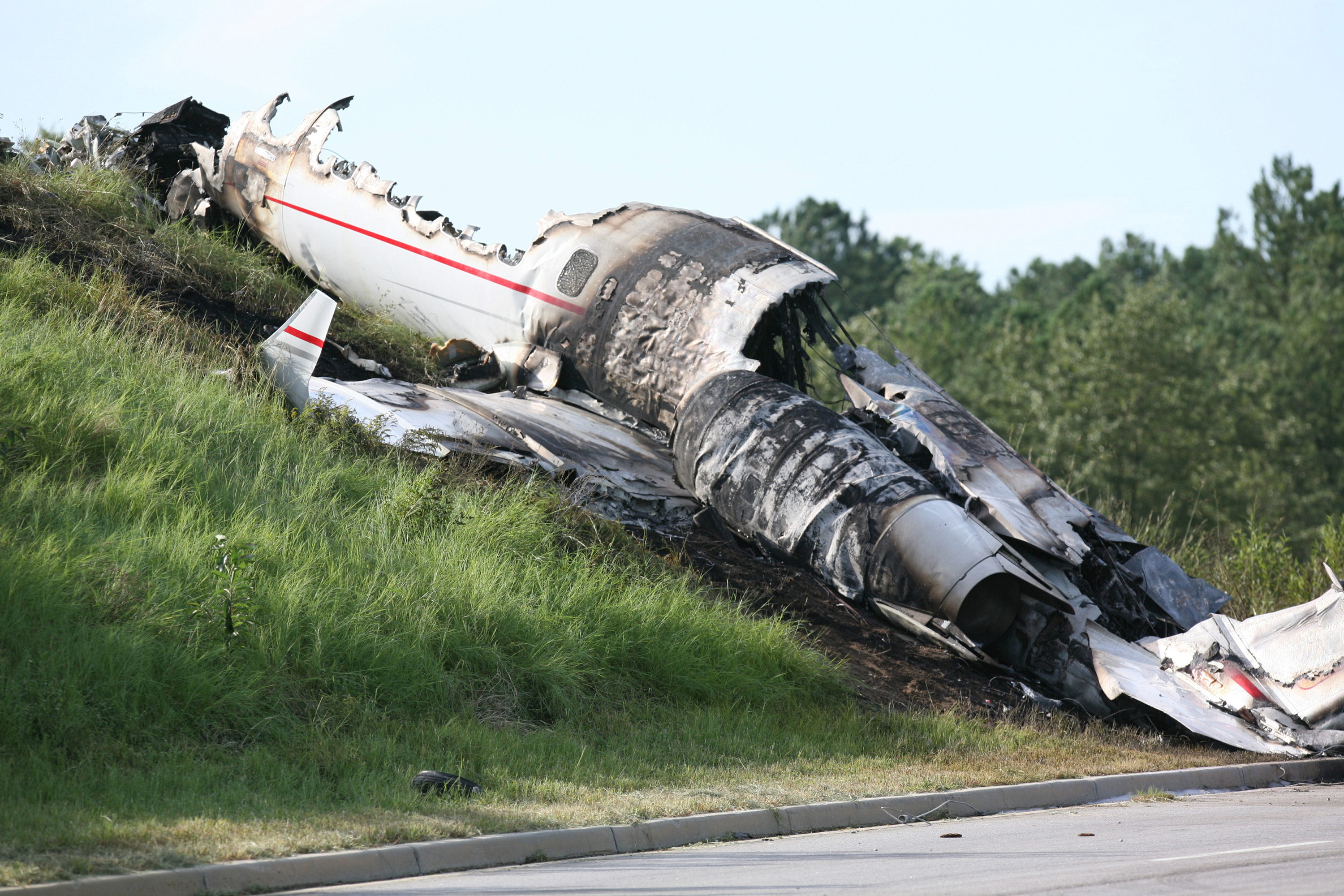
This accident resulted in the deaths of the captain, first officer, and two passengers, while two other passengers survived with serious injuries. Multiple factors were identified as contributing to the crash, such as inadequate maintenance and crew resource management issues.
The conditions surrounding that incident differ greatly from those of the recent crash, and no connections have been established between the two events. Introduced in the early 1990s, the Learjet 60 is a twin-engine business jet designed for a crew of two and can carry between six and nine passengers.
Its inaugural flight took place in October 1990, and it earned certification in January 1993, according to aviation data.
The Florida tragedy also follows another recent plane crash in Wisconsin, where a pilot reported icing while navigating through a thunderstorm.
On October 13, 2026, a six-seat Piper PA-46 Malibu crashed in a wooded area near Mirror Lake State Park, resulting in six fatalities, including a child, as it traveled from Kenosha to Menomonie.
The aircraft went down shortly before 10 p.m. amidst rain and thunderstorms. Before the crash, the pilot communicated with air traffic control about ice building up on the aircraft’s wings while flying at 24,000 feet.
After receiving approval to descend, the aircraft entered a steep right turn, leading to a loss of communication and flight tracking.
FlightRadar24 data indicated the plane was descending at rates up to 4,000 feet per minute while its airspeed nearly doubled to 340 mph. ‘It bears all the signs of icing-related loss of control,’ commented aviation safety expert Jeff Guzzetti.
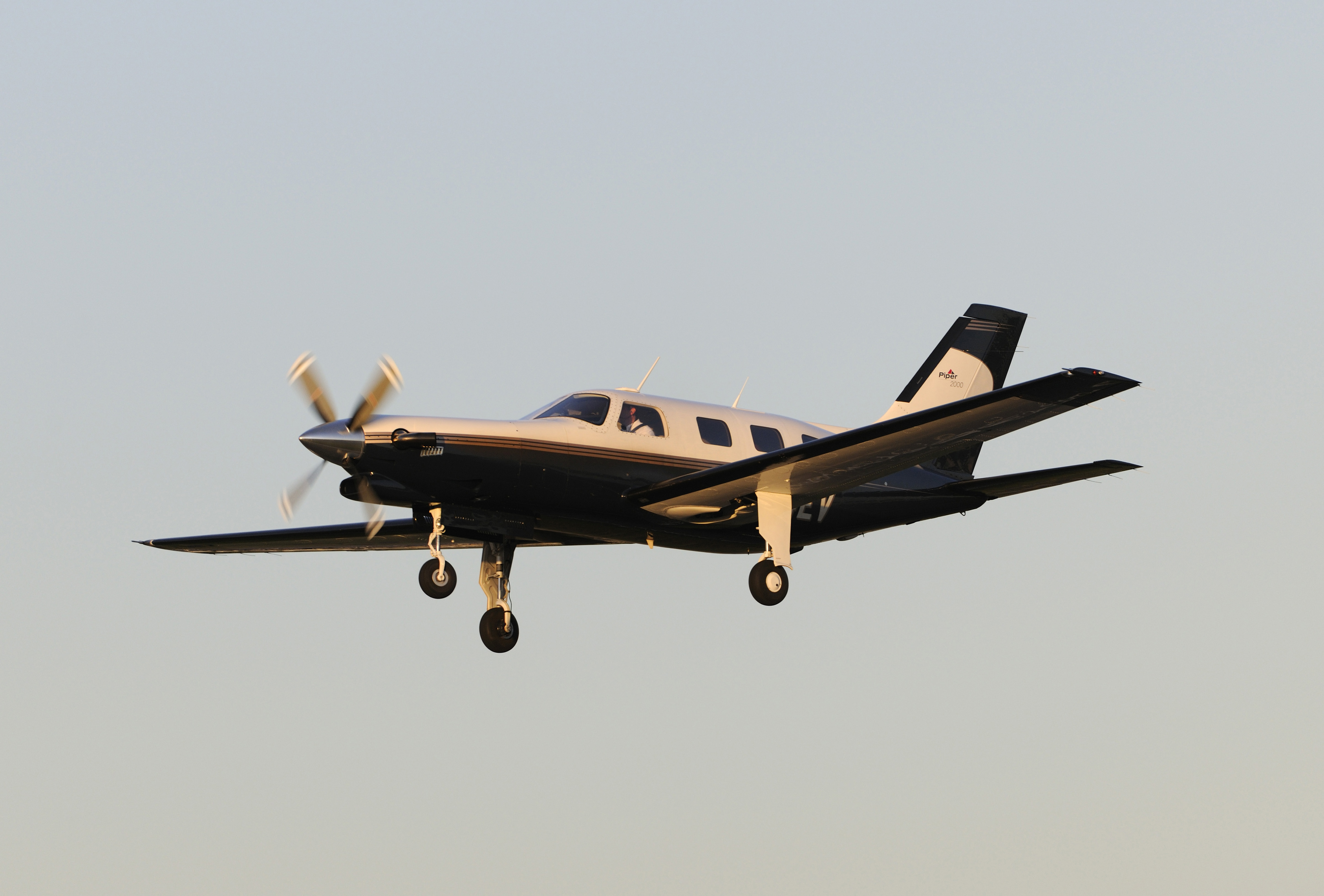
The Wisconsin incident also revived concerns regarding icing hazards experienced by the Piper Malibu and Mirage models, leading to prior recommendations for improved pilot training and equipment modifications.
While the Wisconsin and Florida crashes involved different aircraft, the pilots’ reports of icing serve as a somber reminder of the severe weather dangers posed to aviation. Investigators are still working to determine if icing was a factor in either incident.