More Than 30 Opry Family Members Join Together for Powerful “9 to 5” Grand Finale Honoring Dolly Parton
The Grand Ole Opry has witnessed countless unforgettable moments throughout its history, but Saturday night’s gathering carried an entirely different kind of emotion.
Following the death of country music legend Dolly Parton, members of the Opry family came together in Nashville to celebrate the extraordinary woman whose relationship with the institution stretched back more than six decades.
It was an evening filled with Dolly’s songs, memories from her remarkable career, emotional performances and reminders of just how deeply she influenced the generations of country artists who followed her.
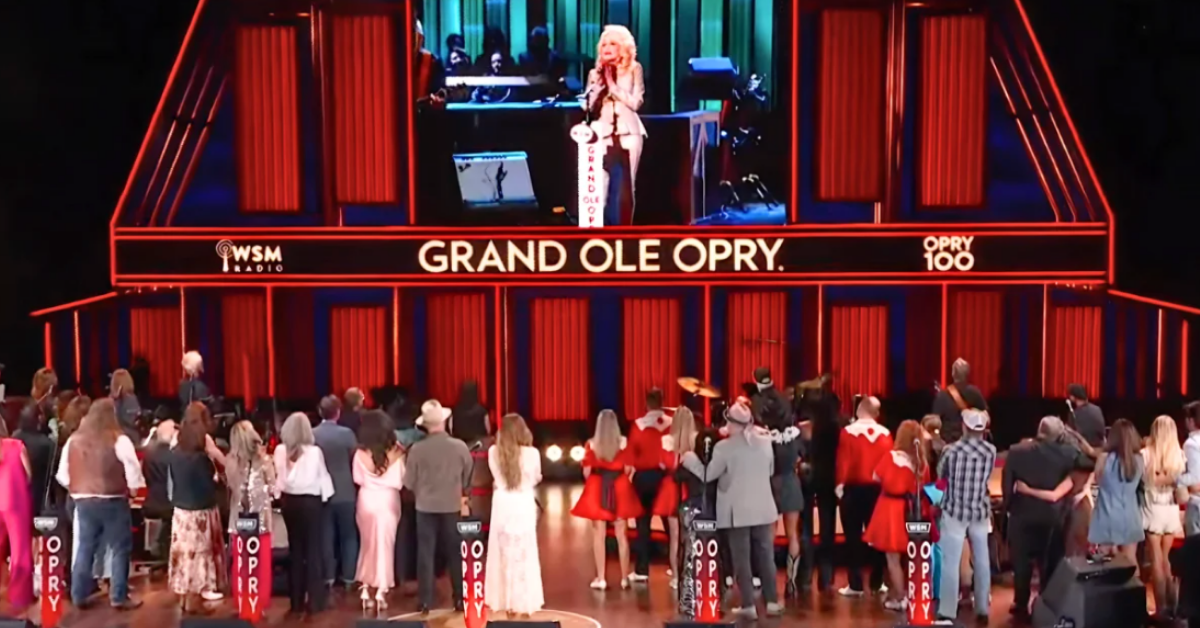
But as the night approached its conclusion, the tribute grew even bigger.
More than 30 members of the Opry family gathered together onstage for a grand finale built around one of Dolly’s most recognizable songs: “9 to 5.”
And there was even a surprise appearance from Jelly Roll.
It was more than another performance of a famous country song. It became a celebration of Dolly’s life — performed on the very stage that had played such an important role in her story.
Carly Pearce Opened The Evening With A Personal Tribute
The emotional night began with Carly Pearce, whose connection to Dolly made the moment particularly meaningful.
Long before becoming a country music star herself, Pearce worked as a performer at Dollywood. Years later, in 2021, she became a member of the Grand Ole Opry after receiving an invitation from Dolly herself.
That history made her appearance Saturday night feel especially appropriate.
Pearce opened the tribute by performing “Those Memories of You.”
Before performing, she made it clear just how much the moment meant to her, telling the audience that honoring the “queen” felt like the right thing to do and expressing her love for Dolly.
It was the beginning of an evening in which one artist after another stepped forward to tell Dolly’s story through the music she left behind.
View this post on Instagram
The Opry Family Revisited Some Of Dolly’s Most Beloved Songs
The tribute continued with a collection of performances representing different chapters of Dolly’s extraordinary catalog.
Kathy Mattea took on one of the most recognizable country songs ever recorded — “Jolene.”
The song has followed Dolly throughout much of her career and has been interpreted by countless artists across different genres and generations.
Then Ketch Secor and Molly Tuttle joined together for “Just Someone I Used to Know.”
Channing Wilson performed “My Tennessee Mountain Home,” a song that has always carried a special connection to Dolly’s upbringing in East Tennessee and the place that shaped so much of her identity.
But one of the evening’s most personal performances came from within Dolly’s own family.
Her niece, Jada Star, stepped onto the Opry stage and honored her aunt by performing “The Orchard.”
With every performance, the audience wasn’t simply hearing famous songs.
They were moving through different pieces of Dolly’s life.
View this post on Instagram
Dolly Was Present Throughout The Night Through Her Own Performances
Even though Dolly could no longer physically walk onto the stage, the Opry made sure her presence remained part of the evening.
Throughout the tribute, video screens inside the historic venue showed clips from some of Dolly’s memorable appearances at the Grand Ole Opry.
For longtime fans, those images carried enormous emotional weight.
Here was the Dolly they remembered — smiling, performing and commanding a stage that had been part of her journey since she was a teenager.
And that connection goes back much further than many people realize.
Dolly Parton Was Only 13 When She First Stood On The Opry Stage
Dolly’s relationship with the Grand Ole Opry didn’t begin after she became famous.
It began when she was still a child with an enormous dream.
In 1959, a 13-year-old Dolly Parton appeared at the Opry.
According to the Opry’s own remembrance of that historic night, Johnny Cash introduced the young singer to the audience as a little girl from East Tennessee.
Dolly then performed George Jones’ “You Gotta Be My Baby.”
The reaction was extraordinary.
The young Dolly received three encores.
Looking back more than six decades later, it almost feels like the audience was witnessing the beginning of something much bigger than anyone could have imagined.
The girl from East Tennessee would eventually become one of the most recognizable entertainers in the world.
And the Opry remained part of her story.
Ten Years Later, Dolly Officially Became Part Of The Opry Family
On January 4, 1969, Dolly Parton was officially inducted into the Grand Ole Opry.
She was just 23 years old.
Country music legend Gene Autry invited her to become a member, formally connecting Dolly with an institution that she had dreamed about since childhood.
From that point forward, Dolly wasn’t simply a performer who occasionally appeared on the Opry stage.
She was part of its family.
That history helps explain why Saturday night’s tribute carried so much meaning.
The Opry wasn’t simply remembering a superstar.
It was saying goodbye to one of its own.
Then Came “9 To 5”
After the individual performances and memories, the evening moved toward its grand finale.
And rather than ending quietly, the Opry family chose to celebrate Dolly with one of the most energetic and recognizable songs of her entire career.
More than 30 members of the Opry family gathered together onstage for “9 to 5.”
The performance turned the stage into a celebration of the woman whose music had influenced so many of the artists standing there.
Then came another surprise.
Jelly Roll appeared during the finale, adding another generation of Nashville music to the gathering.
The symbolism was difficult to miss.
Dolly’s career had stretched across generations, and now artists from different eras were standing together on the same stage singing one of the songs that helped make her a global superstar.
But “9 To 5” Wasn’t Really The Final Moment
After the enormous group performance, the atmosphere changed once again.
The performers remained together.
But this time, instead of singing another Dolly Parton song themselves, they turned their attention toward the screen.
And they listened.
The evening concluded with the assembled performers watching Dolly herself perform “I Will Always Love You.”
It was a remarkably fitting way to end the tribute.
Throughout the night, other artists had sung Dolly’s songs for her.
Now, at the very end, her own voice was allowed to take over.
For a songwriter who spent decades giving the world words for love, heartbreak, hope and goodbye, few songs could have carried more meaning in that moment.
“I Will Always Love You” was no longer simply another famous song from Dolly’s catalog.
In that room, on that night, it became a farewell.
The Sold-Out Show Helped Continue Another Part Of Dolly’s Legacy
The tribute didn’t only celebrate Dolly through music.
Proceeds from the sold-out Saturday night performance were donated to Dolly Parton’s Imagination Library, the literacy program that became one of the most important parts of her philanthropic legacy.
Dolly Parton’s Imagination Library
Dolly launched the program in 1995, inspired in part by her father, Robert Lee Parton, who had never had the opportunity to learn to read and write.
What began as a local effort in Tennessee eventually grew into an enormous international program providing books to children.
That meant Saturday night’s audience wasn’t only remembering Dolly.
Through their attendance, they were also helping continue something she deeply cared about.
Her songs filled the Opry.
Her memories filled the screens.
And the proceeds helped put books into children’s hands.
It would be difficult to imagine a tribute more closely connected to the different parts of Dolly’s life.
A Larger Dolly Parton Tribute Is Still Expected
Saturday night’s gathering was part of the Grand Ole Opry’s tradition of recognizing an Opry member following their death.
According to the report, however, this is not expected to be the final major celebration of Dolly’s life at the Opry.
A larger and more official tribute dedicated to her is expected in the future.
Considering Dolly’s extraordinary relationship with the Opry, that future celebration could become one of the most significant country music gatherings in recent memory.
But Saturday night already gave fans something they will likely remember for years.
From A 13-Year-Old Girl To A Country Music Legend
Perhaps the most powerful part of the evening wasn’t any single performance.
It was the history behind where those performances were taking place.
In 1959, 13-year-old Dolly Parton walked onto that stage as a little girl from East Tennessee with a dream.
The audience loved her enough to call her back for three encores.
Ten years later, she became an official member of the Opry.
Over the decades that followed, she became far more than a country singer.
She became a songwriter whose compositions traveled across genres, an actress, businesswoman, philanthropist and one of the most recognizable personalities American entertainment has ever produced.
And after her passing, artists whose own careers were influenced by the world Dolly helped create returned to that same Opry stage to sing her songs.
More than 30 of them eventually stood together for “9 to 5.”
Then the singing stopped.
They turned toward the screen.
And Dolly’s voice filled the room one more time with “I Will Always Love You.”
There was something beautifully circular about it.
The Grand Ole Opry helped introduce America to Dolly Parton when she was only 13 years old. More than six decades later, that same stage became a place where the country music family gathered to say goodbye. ❤️🕊️
And perhaps there was no more appropriate way to finish the evening than allowing Dolly to have the final song herself.
They spent the night singing for Dolly.
In the final moments, Dolly sang for them.